
![[photo, Black and Yellow Orb-Weaver Spider (Argiope aurantia), Glen Burnie, Maryland]](/msa/mdmanual/01glance/wildlife/arachnids/images/1198-1-06504c.jpg)
Black & Yellow Orb-Weaver Spider (Argiope aurantia), Glen Burnie, Maryland, August 2014. Photo by Diane F. Evartt.
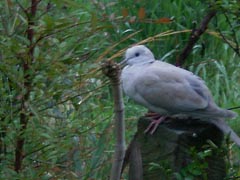
Eurasian Collared-Dove (Streptopelia decaocto), Glen Burnie, Maryland, April 2011. Photo by Diane F. Evartt.
![[photo, Eastern Snapping Turtle (Chelydra s. serpentina), Annapolis, Maryland]](/msa/mdmanual/01glance/wildlife/reptiles/images/1198-1-5957a.jpg)
![[photo, Catalpa sphinx caterpillar, Glen Burnie, Maryland]](/msa/mdmanual/01glance/wildlife/insects/images/1198-1-06610
b.jpg) Countless different species* may be observed in Maryland's natural areas, and are divided by numerous physical features. The most abundant families are amphibia (amphibians); arthropods (crustaceans, insects, & spiders); aves (birds); mammalia (mammals); and reptilia (reptiles). Often, they are classified further by diet, as carnivores, herbivores, and omnivores, although this division can be narrowed to define specific dietary habits, such as insectivores.
Countless different species* may be observed in Maryland's natural areas, and are divided by numerous physical features. The most abundant families are amphibia (amphibians); arthropods (crustaceans, insects, & spiders); aves (birds); mammalia (mammals); and reptilia (reptiles). Often, they are classified further by diet, as carnivores, herbivores, and omnivores, although this division can be narrowed to define specific dietary habits, such as insectivores.
Catalpa sphinx caterpillar, Glen Burnie, Maryland, September 2014. Photo by Diane F. Evartt.
![[photo, Eastern Box Turtle (Terrapene c. carolina), Glen Burnie, Maryland]](/msa/mdmanual/01glance/wildlife/reptiles/images/1198-1-07164c.jpg) Maryland maintains nearly forty thousand acres of wildlands, which are encompassed by State parks, forests, and wildlife management areas. These areas allow for Maryland's natural wildlife to thrive virtually undisturbed. State wildlands are protected by law, and are monitored and protected by the Natural Resources Police Force.
Maryland maintains nearly forty thousand acres of wildlands, which are encompassed by State parks, forests, and wildlife management areas. These areas allow for Maryland's natural wildlife to thrive virtually undisturbed. State wildlands are protected by law, and are monitored and protected by the Natural Resources Police Force.
Eastern Box Turtle (Terrapene c. carolina), Glen Burnie, Maryland, June 2015. Photo by Diane F. Evartt.
© Copyright Maryland State Archives